

The 1926 Irish Census Goes Online Saturday. Are You Ready?
I have been tracing my Irish roots for over a three decades. With common surnames and stories I never got to hear, I’ve hit more brick walls than I can count. Every time I try to break through, I sigh and think the same thing: "If only we had one more census."
This Saturday, we get it!
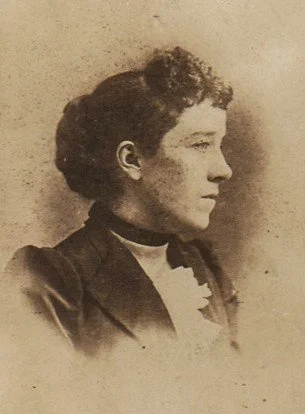
Ellen Goulding Canfield
b. 1863 Cork, Ireland
d. 1907 Bronx, New York
On April 18, 2026 — one hundred years to the day after it was enumerated — the 1926 Census of Population will be made freely available and fully searchable online by the National Archives of Ireland, releasing over 700,000 individual household returns The National Archives of Ireland to researchers around the world.
Irish genealogy research is notoriously challenging. Records were lost to fire, to war, to time. The last Irish census released to the public was the 1911 census, made available digitally in 2009 — which means for fifteen years, that 1911 record has been the end of the road for many family trees. Saturday changes that.
What Makes This One Different
The 1926 census was the first conducted after the formation of the Irish Free State, capturing a country still shaped by the legacy of the First World War, the War of Independence, and the Civil War. Central Statistics Office It's a snapshot of Ireland at a turning point — families rebuilding, borders redrawn, a new nation finding its footing.
Like the 1901 and 1911 censuses, the 1926 records include names, relationships, ages, occupations, literacy, and Irish language ability. The Free State introduced new categories not found in any previous census, giving researchers an even richer picture of daily life.
And here's something remarkable: every single page of the census taken in April 1926 has survived. The database will cover nearly 3 million people, fully searchable at no cost.
Don't Assume This Isn't for You
As with many descendants of Irish immigrants, your family may have arrived decades prior to 1926. If you think you can skip Saturday's release. I'd encourage you to reconsider.
Frequently, families did not emigrate together. A sibling, a cousin, a parent who was too old to make the journey. Those households — the ones who remained — can provide you the town, the parish, the maiden name you've been missing.
Think of it the way I think about lateral research: open another tab and follow where the sources lead. You may not find the ancestor you expected. You may find something better.
Where to Look and What to Search
The records will be available at nationalarchives.ie beginning Saturday, April 18. You can search by name, location, and other details, and view original images of the handwritten returns alongside the transcriptions.
A few things worth doing before Saturday:
Pull up whatever 1901 and 1911 records you already have for your Irish lines, so you can compare across all three censuses
Make note of siblings, extended families, and neighbors — remember that FAN (friends, associates, neighbors) research can open doors you didn't know existed
If you've been stuck on an Irish brick wall, write down your research question now, so you know exactly what you're looking for when the records go live
Do you have Irish roots you've been trying to trace? What's the question you're hoping Saturday's release might finally answer? Leave a note in the comments — I'd love to hear what you find.